Ages 13+ · High school & college · 5 & 10 visit packs · Locust Valley, NY
Show up fresh for the next one.
Cold plunge, contrast, compression, infrared sauna, red light, hyperbaric oxygen and breathwork, matched to each sport and built into a routine a high school or college athlete can actually keep. Supervised, explained, and priced for students.
5 visits from $294 · 10 visits from $490 · Use as many services as you want each visit
Staff-guided sessionsPosted safety protocol in every roomParent / guardian consent for athletes under 18Every claim on this page links to its source
Made for two people
The athlete feels it. The parent signs off on it.
For Athletes
Fresher legs for back-to-back games, showcases and tournament weekends.
Less soreness and inflammation after hard practices, so the next session is a good one.
More in the tank. Therapies that support oxygen delivery and repeat-sprint ability late in games.
The same tools the pros use. See who below, sport by sport.
For parents
Proven by pros, ready for teens. Every therapy shows which professional athletes use it and how we run it for athletes 13 and up.
Screened and supervised. A health history check before the first visit and posted safety guidelines in every room.
A complement, never a replacement. Recovery supports coaching, nutrition and medical care. It doesn’t stand in for them.
Student pricing at 40–50% below the value of the same services booked individually.
Release · Repair · Rebuild
What each therapy does for an athlete
Every visit follows our three-step framework: calm the nervous system, repair muscle and tissue, then refuel. Every therapy we offer student athletes carries the same two marks.
PRO-PROVEN
Used by professional athletes and teams in the NBA, NFL, MLB, top-flight soccer and pro tennis. We name who, with the source.
TEEN-READY 13+
Cleared for athletes 13 and up with parent or guardian consent, a health screen, and staff who set time, temperature and pressure. Where studies include teens, we link them.
Release
Nervous system
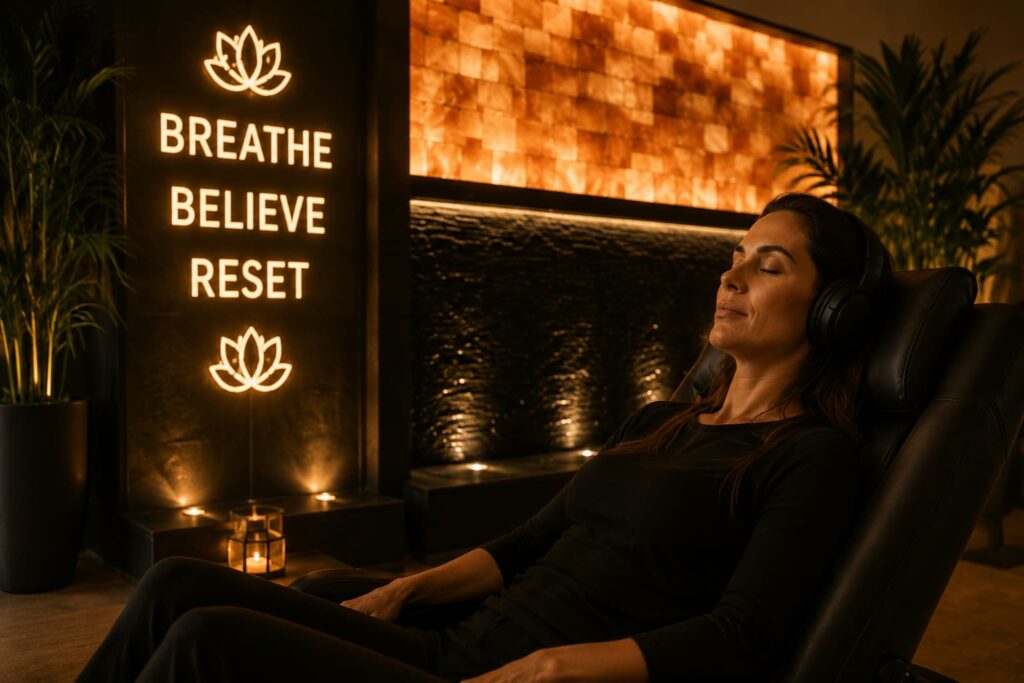
Breathe & Believe Reset
A 25-minute ritual of guided breathwork, affirmations, compression and Pulsetto neuromodulation. It shifts the body out of fight-or-flight and into recovery mode, the state where muscles repair. Before games, it settles nerves and sharpens focus.
PRO-PROVENFreddie Freeman uses a recovery chamber built around guided breathwork.
TEEN-READY 13+
Athletes 13–17 do the Reset with breathwork, affirmations and compression. Pulsetto is reserved for 18+, since its maker hasn’t evaluated it in under-18s.
Pulsetto ↗
Lowers muscle-damage and inflammation markers after hard games, cuts soreness for up to four days, and helps hold sprint, jump and agility across back-to-back games.
PRO-PROVENLeBron James · Stephen Curry · Erling Haaland · Andy Murray
TEEN-READY 13+Studied after training in soccer players averaging 15½, with no drop in performance. Study ↗
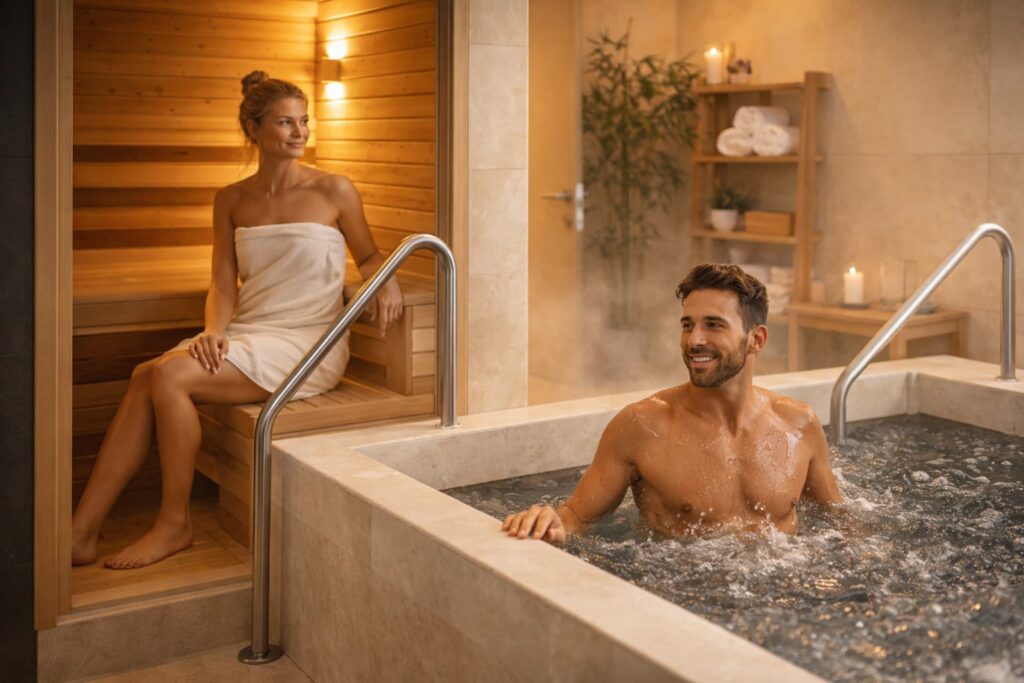
Alternating heat and cold drives blood into and out of working muscle. It reduces soreness, and in contact-sport players it tracked with 2–6% better performance in the next game than passive rest.
PRO-PROVENChristian McCaffrey
TEEN-READY 13+Tested in the same study of 15-year-old soccer players. Study ↗
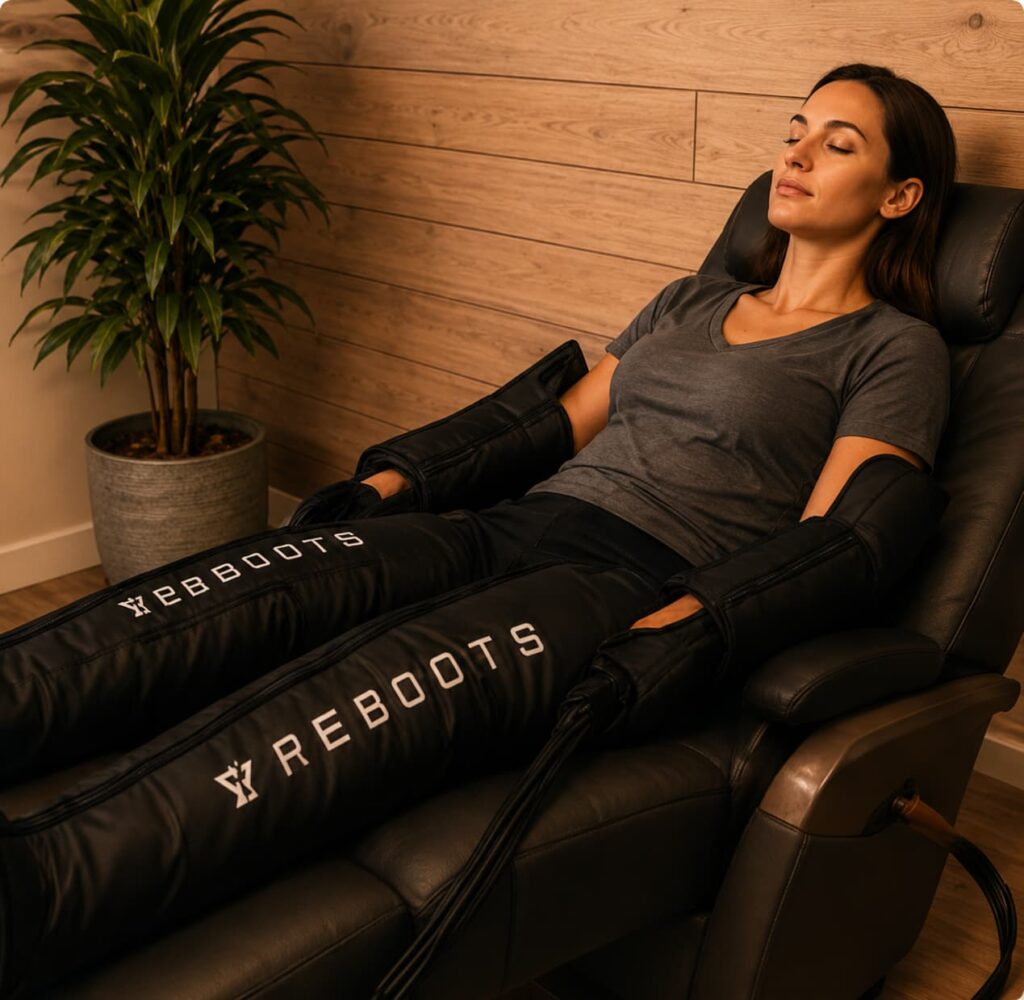
Pulsing pressure moves blood and fluid out of tired legs. After an all-out sprint test, athletes in compression cleared lactate faster than with seated rest (8.4 vs 12.6 mmol/L at 20 minutes), and a 99-study analysis links it to less soreness and fatigue.
PRO-PROVENStephen Curry · LeBron James
TEEN-READY 13+Staff set the pressure, and athletes can lower it at any time.
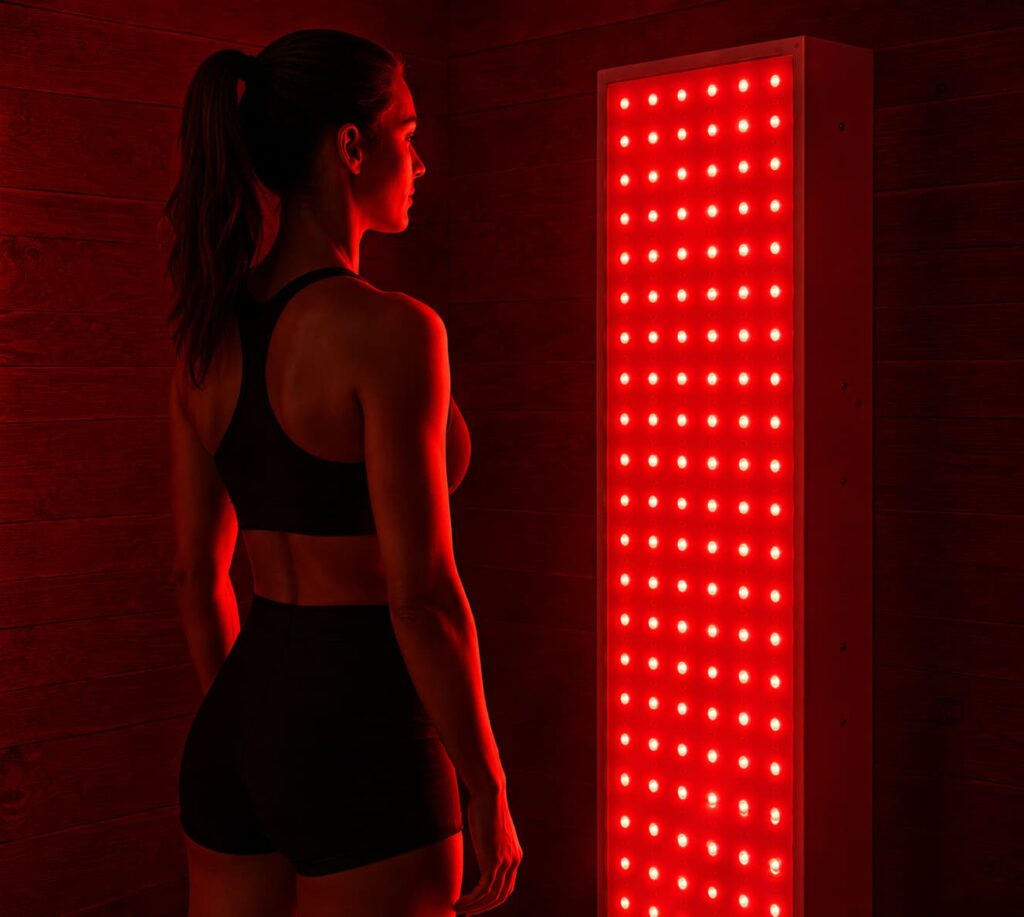
Red and near-infrared light supports energy production in muscle cells. In high-level soccer players it raised VO₂max and time to exhaustion and lowered muscle-damage and inflammation markers. In rugby players it improved repeated-sprint times.
PRO-PROVENErling Haaland · Kevin Love · Will Smith
TEEN-READY 13+LED light used in a randomized trial with participants ages 11–20, with no harms noted. Study ↗
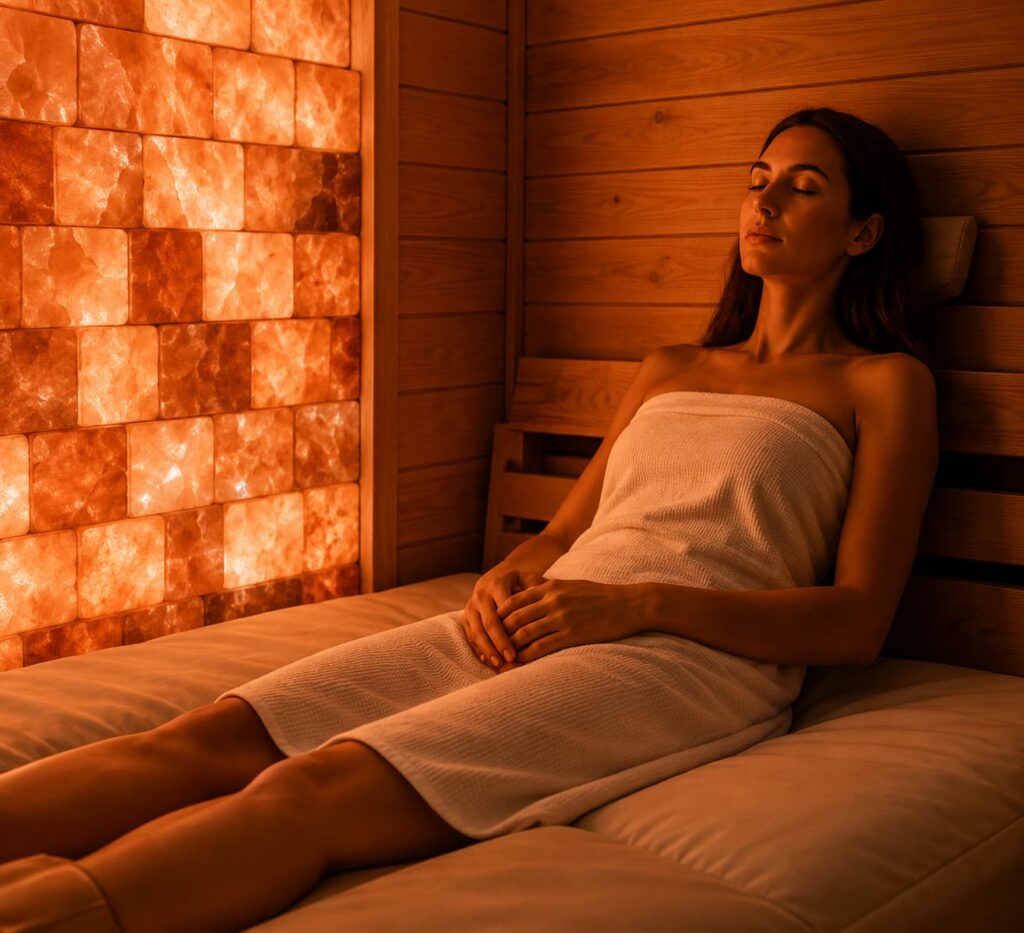
Heat that warms muscle directly. In team-sport athletes, a post-exercise infrared sauna reduced soreness and the drop in jump performance, and regular use over six weeks improved early sprint speed. A strong fit for lift days.
PRO-PROVENStephen Curry · Erling Haaland · Will Smith
TEEN-READY 13+Shorter sessions at lower temperatures for younger athletes, with water before and after.
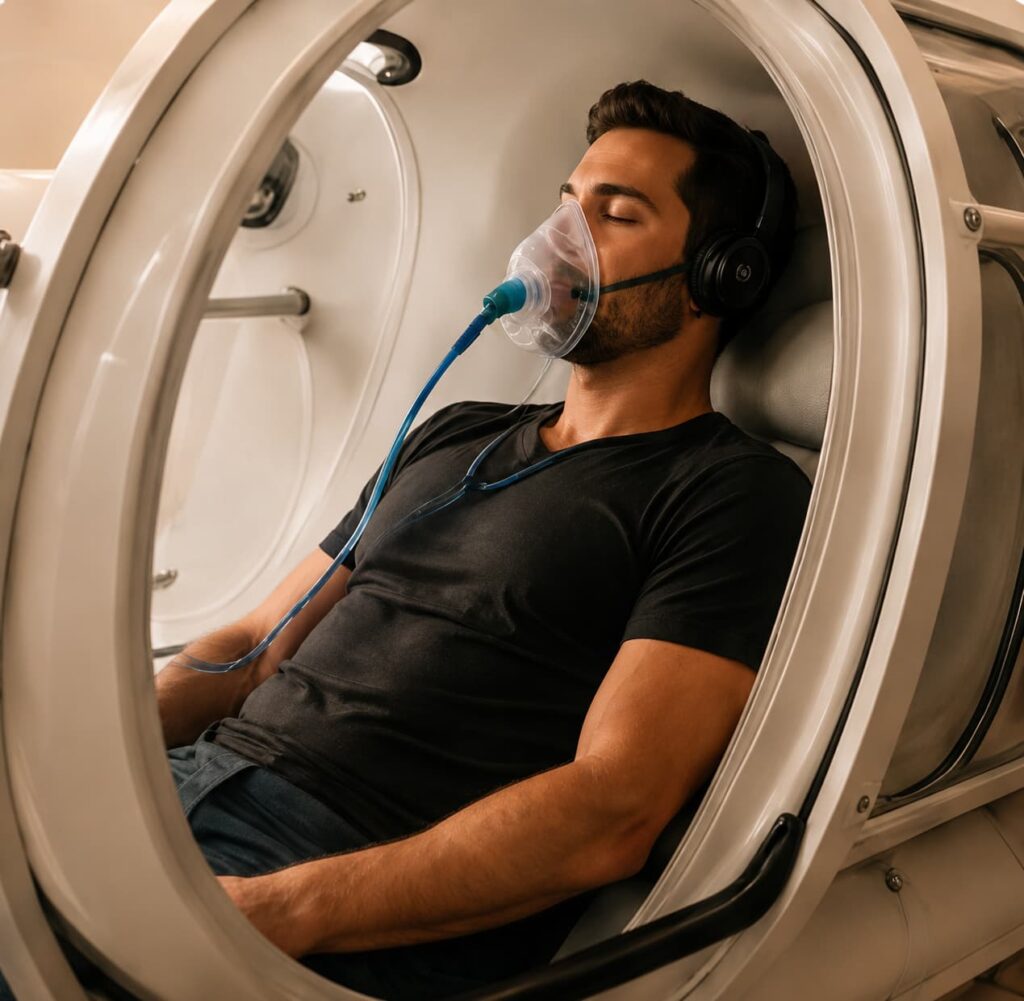
Breathing concentrated oxygen in our seated chamber at 1.5 atmospheres dissolves more oxygen into the blood plasma, raising the oxygen available to muscle and tissue that’s repairing.
PRO-PROVENNovak Djokovic · Russell Wilson · LeBron James · the Philadelphia Phillies
TEEN-READY 13+Delivered safely, with low complication rates, across 329 patients up to age 18. Study ↗
Refuel on the way out of every visit. Recovery works best as a habit, so we help athletes build a weekly rhythm around their schedule, not a one-off treat.
Timing matters
Cold plunging right after strength training can blunt muscle and strength gains over a 12-week program. In the off-season or during a strength block, we steer lift days toward compression, red light and sauna, and save the cold for game days and tournament weekends.
Repeated sprints, jumps and hard cuts, often two or three games a week plus weekend tournaments. Recovery between games decides who still has legs in the fourth quarter.
What the research says
Cold water held up best over a 3-day tournament. Among 29 players, cold water immersion preserved sprint, agility and flexibility better than compression garments or a carbohydrate-and-stretching routine. 20-metre acceleration dropped just 0.5%, versus 3.2% in the compression group.
More spring in the legs the next day. After competitive games, players who used cold water immersion jumped higher 24 hours later and reported less leg fatigue than with no recovery. It outperformed sports massage, especially for women.
Photos cropped for display. Click each photo for credits and licence details.
Football
One game a week, but every snap is a collision or an explosive sprint. The damage lingers well into the next week of practice.
What the research says
The recovery window is two days, not one night. College players who played a full game still had elevated muscle-damage markers about 42–44 hours later, right as the next week of practice ramps up.
Hot-cold contrast for contact sport. In rugby players recovering between games, contrast baths and ice baths were linked to 2–6% better performance than passive rest. The trend was consistent, though not statistically significant.
Protect the off-season strength block. Cold right after lifting can blunt strength and muscle gains, so lift days get sauna, red light and compression instead.
Photos cropped for display. Click each photo for credits and licence details.
SOCCER
Ninety minutes of stop-start running, sprints and direction changes, with club, school and showcase schedules that often overlap.
What the research says
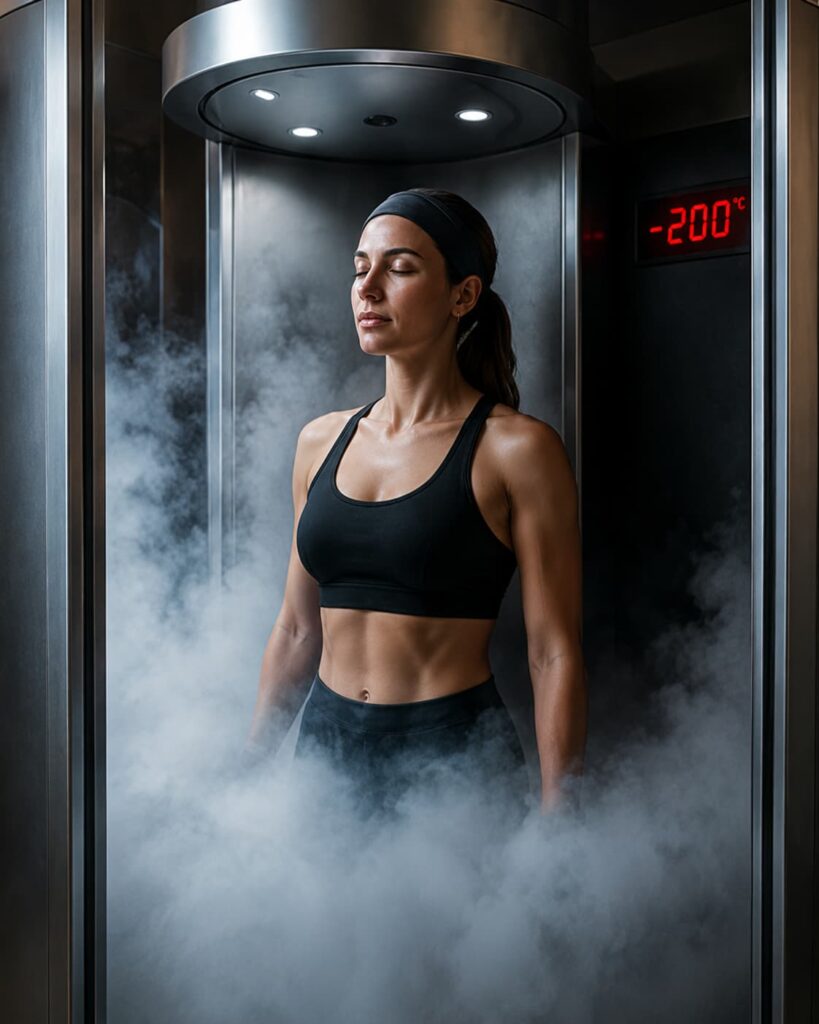
A cold plunge right after the match. Players who did 10 minutes in 10°C (50°F) water post-match had lower muscle-damage markers, less soreness and better quadriceps strength recovery at 24–48 hours than players in neutral-temperature water.
Light before the work. In high-level soccer players, photobiomodulation (near-infrared light, here from a laser device) before an intense running test increased VO₂max and time to exhaustion, and lowered muscle-damage and inflammation markers.
Photos cropped for display. Click each photo for credits and licence details.
TENNIS
Tournaments mean matches on back-to-back days, thousands of serves and strokes, and long hours in the heat. Soreness compounds fast.
What the research says
Cold keeps tournament soreness from stacking up. Across three consecutive days of match play, competitive players who used cold water immersion or whole-body cryotherapy saw no build-up in soreness. With passive rest, soreness climbed day after day.
Compression for the next-day legs. A meta-analysis of 99 studies found compression reduces both soreness and perceived fatigue after exercise, which matters most when the next match is tomorrow morning.
Photos cropped for display. Click each photo for credits and licence details.
baseball
A long season of high-velocity throwing. For pitchers especially, how fast the arm bounces back between outings sets the whole rotation.
What the research says
Cooling speeds next-day arm strength. College pitchers who cooled the shoulder and forearm after pitching had 95% of their shoulder strength back the next day, versus 83% without cooling. Grip strength recovered better too.
Velocity held late into the game. In a simulated five-inning outing, arm and shoulder cooling between innings kept pitch velocity higher, most clearly in innings 4 and 5, and pitchers reported feeling more recovered.
“Value” assumes two services per visit at our average single-session price of $49. Most athletes stack two or three.
For current high school and college athletes. Athletes under 18 need a parent or guardian consent form on file.
For parents
Questions parents ask us first
You’re welcome to tour the studio with your athlete before the first visit.
Is this safe for teenagers?
Every therapy in the program is Teen-ready for athletes 13 and up. That means a signed parent or guardian consent, a health history screen before the first visit, and staff who set the time, temperature and pressure for each athlete. Each room has its safety protocol posted on the wall. Athletes under 18 do the Breathe & Believe Reset without Pulsetto neuromodulation.
Does this replace physical therapy or the athletic trainer?
No. Our services support everyday recovery from training and competition. For any injury, follow your athlete’s physician, physical therapist or athletic trainer first. We’re glad to work around their plan.
How often should my athlete come?
In season, most athletes do best with one or two visits a week timed after games, plus extra sessions around tournament weekends. In the off-season, we time visits so they don’t interfere with strength gains.
Can teammates come together?
Yes. Ask us about team and club pricing for groups and coaches.